Tag: relationships

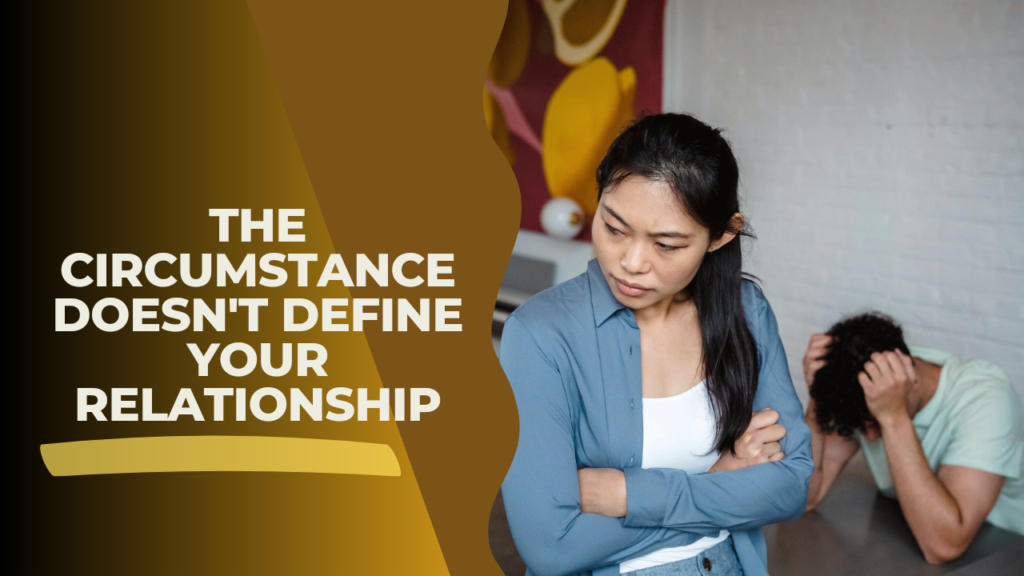
  • The Circumstance Doesn’t Define Your Relationship

    Relationship 101

    Topic: The Circumstance Doesn’t Define Your Relationship

    Relationships are a crucial part of our lives and they play a significant role in shaping who we are. It is often said that circumstances do not make a person; instead, they reveal what kind of person we are. In most cases, we cannot change or alter the lifestyle of our partners to a large degree. However, who we are as individuals will determine whether we can cope with our partners or not.

    It is essential to note that successful relationships require resilience, patience, and commitment. It is not uncommon to encounter challenges in relationships. For instance, financial difficulties, infidelity, violence, among others, can put a strain on any relationship. However, how we handle these challenges will reveal who we are as individuals.

    One thing we can learn from successful relationships is that adversity can bring out the best in us. When we face challenges, we have the opportunity to demonstrate humility, temperance, love, and submission to our partners. Adversity in relationships can refine us and make us better versions of ourselves. Those who have gone through more challenges in their relationships often remain standing, while others crumble at the slightest hint of discomfort.

    It is crucial to keep our hearts guarded in relationships, as the Bible says, for from it come the issues of life. When we feel overwhelmed and feel like we cannot take it anymore, it is vital to lean on biblical injunctions and the guidance of the Holy Spirit. Breaking rank with our partners should only be considered as a last resort.

    It is worth noting that not all relationships will work out. However, as individuals, we can choose to exhibit virtues such as resilience, patience, and commitment, knowing that the Holy Spirit dwells in us. When we do our best in relationships, we can be confident that we have done everything in a way that God, angels, and humans would say we have done our best.

    In conclusion, our circumstances, whether of money, fame, wealth, or relationships, do not define us. We have the power to choose who we want to be, and we can turn out to be good or bad, depending on our choices. Successful relationships require commitment, resilience, patience, and a willingness to face challenges head-on. When we exhibit these virtues, we can build strong and lasting relationships that will shape us positively.

    WALE ADEWUMI

    For more enriching messages on relationship go to:
    http://worldchangersnetwork.org/category/love-relationship/

    For books:
    http://worldchangersnetwork.org/store/love/

  • Conflict and Effect on Children

    For the Sake of the Children

    Once upon a time, there was a family that lived in a beautiful house in a peaceful neighborhood. They had a loving marriage, two children, and everything seemed perfect. However, things started to change when the parents began having conflicts and arguments.

    At first, the arguments were just small disagreements that the children didn’t pay much attention to. But over time, the language used in these arguments became more hurtful and careless. The parents started saying mean things to each other and even began talking badly about each other in front of their children.

    The children were confused and scared. They didn’t know how to react to their parents’ behavior. They felt like they were walking on eggshells around their own home. They started to feel like they were caught in the middle of their parents’ conflicts, and it was affecting their emotional well-being.

    One day, the parents had a particularly intense argument. The children were in the other room, but they could hear everything. The parents were shouting and saying hurtful things to each other. The children felt like they were in a war zone, and they didn’t know what to do.

    After the argument was over, the children felt even more scared and confused. They didn’t know how to process their emotions, and they didn’t know how to talk to their parents about what had happened. They started to feel like they couldn’t trust their parents anymore.

    Over time, the children started to develop negative attitudes towards their parents. They began to see their parents as angry and hurtful people who couldn’t control their emotions. They also started to pick up on the negative language used by their parents and started using it themselves.

    As the children grew up, they began to have their own relationships. However, because of the negative example set by their parents, they struggled to maintain healthy relationships. They had a hard time expressing themselves in a positive way and often resorted to hurtful language.

    Eventually, the children got divorced just like their parents did. They realized that they had learned their negative behavior and language from their parents and that it had affected every aspect of their lives. They wished their parents had been more careful with their language and behavior, and that they had shielded them from their conflicts.

    In the end, the children realized that their parents’ careless language had set them on a path of destruction. They wished they had been shielded from the negative drama between their parents and that their parents had been more mindful of the impact their language had on their children.